


The Ultimate Guide to Kitten Food: Choosing the Best High Protein Diet for Healthy Growth


Raising a healthy, happy kitten starts with the right nutrition. Kitten food, especially high protein kitten food, provides the foundation for strong bones, a shiny coat, sharp eyesight, and optimal development.
In this guide, we’ll explore everything a cat parent needs to know about choosing, feeding, and understanding kitten food:
1. Why Kitten Nutrition is Different
Kittens grow fast—sometimes doubling their body weight in just a few weeks. During this stage, their bodies need:
- Higher calories
- More protein
- Essential vitamins and minerals like calcium and phosphorus
Adult cat food simply doesn’t cut it. That’s why you need specifically formulated kitten food.
2. What Makes High Protein Kitten Food Important?
Protein is the building block of growth. High protein kitten food ensures:
- Muscle development
- Organ formation
- Immune system strength
- Energy production
Kittens require 30% to 40% protein in their diet for optimal growth. Without it, they may develop slowly or experience long-term health issues.
Animal-based protein (like chicken, turkey, or fish) is preferred, as it contains all essential amino acids like taurine, which cats can’t synthesize on their own.
3. Wet vs. Dry Kitten Food: Which Is Better?
Both have pros and cons. Ideally, a mix of both is recommended.
Wet Kitten Food:
- Higher moisture (good for hydration)
- Softer texture for baby teeth
- More palatable
Dry Kitten Food:
- Helps with dental health
- More convenient and longer shelf life
- Often more affordable
No matter the form, the focus should remain on high protein kitten food options with minimal fillers.
4. Essential Nutrients in Kitten Food
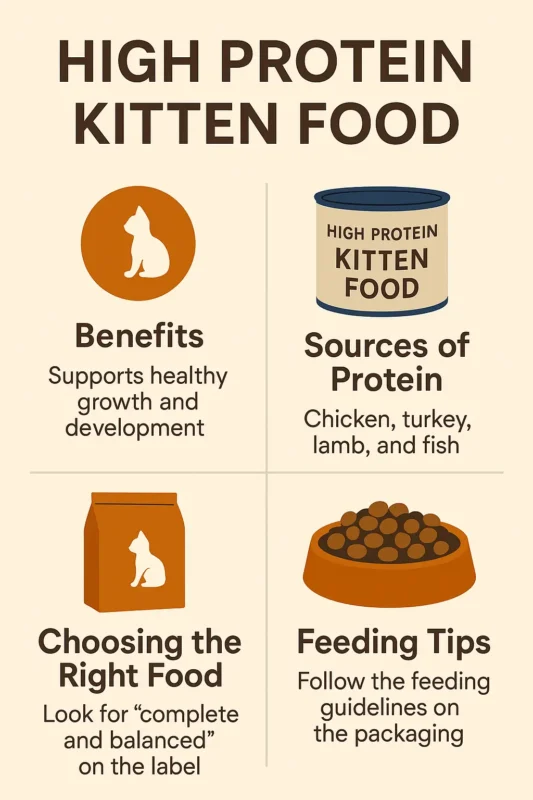
When selecting kitten food, check the label for:
- High protein content from animal sources
- Fat for energy (ideally 18–22%)
- Calcium and Phosphorus for bone growth
- Taurine for heart and vision health
- Omega-3 & 6 fatty acids for skin and coat
- DHA for brain development
Avoid foods with:
- Corn, soy, wheat as main ingredients
- Artificial colors or preservatives
- Excessive by-products
5. How to Choose the Best Kitten Food
Keep these points in mind when shopping for kitten food:
a. Check AAFCO or FEDIAF Statement
Ensure the product meets nutritional standards for kittens.
b. Protein Source Should Be First Ingredient
Chicken, salmon, turkey, or lamb should come before anything else.
c. Read Customer Reviews
Sites like Chewy, PetSmart, or PurePetsFood offer real feedback.
d. Consider Special Needs
If your kitten has allergies or is underweight, ask a vet about specific high protein kitten food options.
6. Top Recommended High Protein Kitten Food Brands
Here are some vet-recommended and customer-approved options:
1. Royal Canin Kitten Dry Food
- Supports immune system and digestion
- Rich in protein and DHA
2. Wellness CORE Grain-Free Kitten Food
- 45% protein from turkey and chicken
- No fillers or artificial ingredients
3. Blue Buffalo Healthy Growth
- DHA from fish oil
- No corn, wheat, or soy
4. Hill’s Science Diet Kitten Food
- Recommended by vets
- Balanced and complete diet
5. Orijen High Protein Dry Kitten Food
- Up to 90% premium animal ingredients
- Freeze-dried coating for flavor
These high protein kitten food brands are ideal for active, growing kittens needing robust nutrition.
7. Homemade vs. Commercial Kitten Food
Homemade Food:
- Allows ingredient control
- Needs precise supplementation (taurine, calcium)
- Must be vet-approved
Commercial Food:
- Convenient and nutritionally balanced
- Backed by research
- Available in wet and dry options
If you choose homemade kitten food, always consult a vet or feline nutritionist to avoid dangerous deficiencies.
8. Common Feeding Mistakes to Avoid
- Giving cow’s milk (causes diarrhea)
- Switching foods too quickly
- Feeding adult cat food
- Not feeding enough protein
- Ignoring hydration
Correct feeding ensures your kitten avoids undernourishment or digestive issues.
9. Feeding Schedules by Age
Here’s a general guideline for feeding kitten food:
| Age | Meals/Day | Food Type |
|---|---|---|
| 0–4 weeks | Mother’s milk or kitten formula | |
| 4–8 weeks | 4 | Wet kitten food |
| 2–3 months | 4 | Wet + dry mix |
| 3–6 months | 3 | High protein mix |
| 6–12 months | 2–3 | Gradual transition to adult food |
10. FAQs About Kitten Food
Q: Can I feed raw meat to kittens?
A: Not recommended unless under veterinary supervision. It may contain harmful bacteria.
Q: When can kittens eat dry food?
A: Start introducing around 5–6 weeks, fully transitioned by 8–10 weeks.
Q: How long should my kitten stay on kitten food?
A: Until 12 months, when you can begin transitioning to adult cat food.
Q: Is high protein kitten food safe for all kittens?
A: Yes, especially for active and growing kittens. It supports muscle and organ development.
Final Thoughts
Choosing the right kitten food is one of the most important decisions in your pet’s early life. A high-quality high protein kitten food provides the nutrients necessary for optimal growth and health.
Whether you’re selecting commercial food or preparing meals at home, ensure your kitten gets:
- Complete and balanced nutrition
- High protein from animal sources
- Proper hydration
Your kitten’s first year sets the tone for a lifetime of health. Explore our curated selection of high protein kitten food options at PurePetsFood Kitten Section.


