

 Dry Cat Food
 Cat Wet Food
 Adult Cat Food
 Kitten Food
 Canned Cat Food
 Cat Pouch Food
 Cat Treats
 Cat Litter Scoop
 Cat Litter Box
 Clumping Cat Litter

 Kitten Milk Replacer
 Cat Deworming Products
 Cat Shampoo
 Cat Bathing
 Cat External Care Products
 Cat Hygiene Products
 Cat Cleanup & Odor Control
 Cat Supplement Products
 Cat Toothbrushes
 Puppy Training
 Cat Feeder
 Cat Grooming
 Catnip
 Cat Food Bowl
 Cat Bow Ties
 Cat Collar
 Cat Harnesses
 Cat Scratchers
 Cat Sunglasses
 Puppy Food
 Adult Dog Food
 Dog Toys
 Dog Harnesses
 Dog Shampoo
 Dog Vitamins and Supplements
 Dog External Care Products
 Rabbit Adult Food
 Rabbit Accessories
 Rabbit Junior Food


 Pet Bed, Carrier & House
 Cat Dress & Tshirt
 Pet Houses
Kitten Care Guide for New Cat Parents in Bangladesh

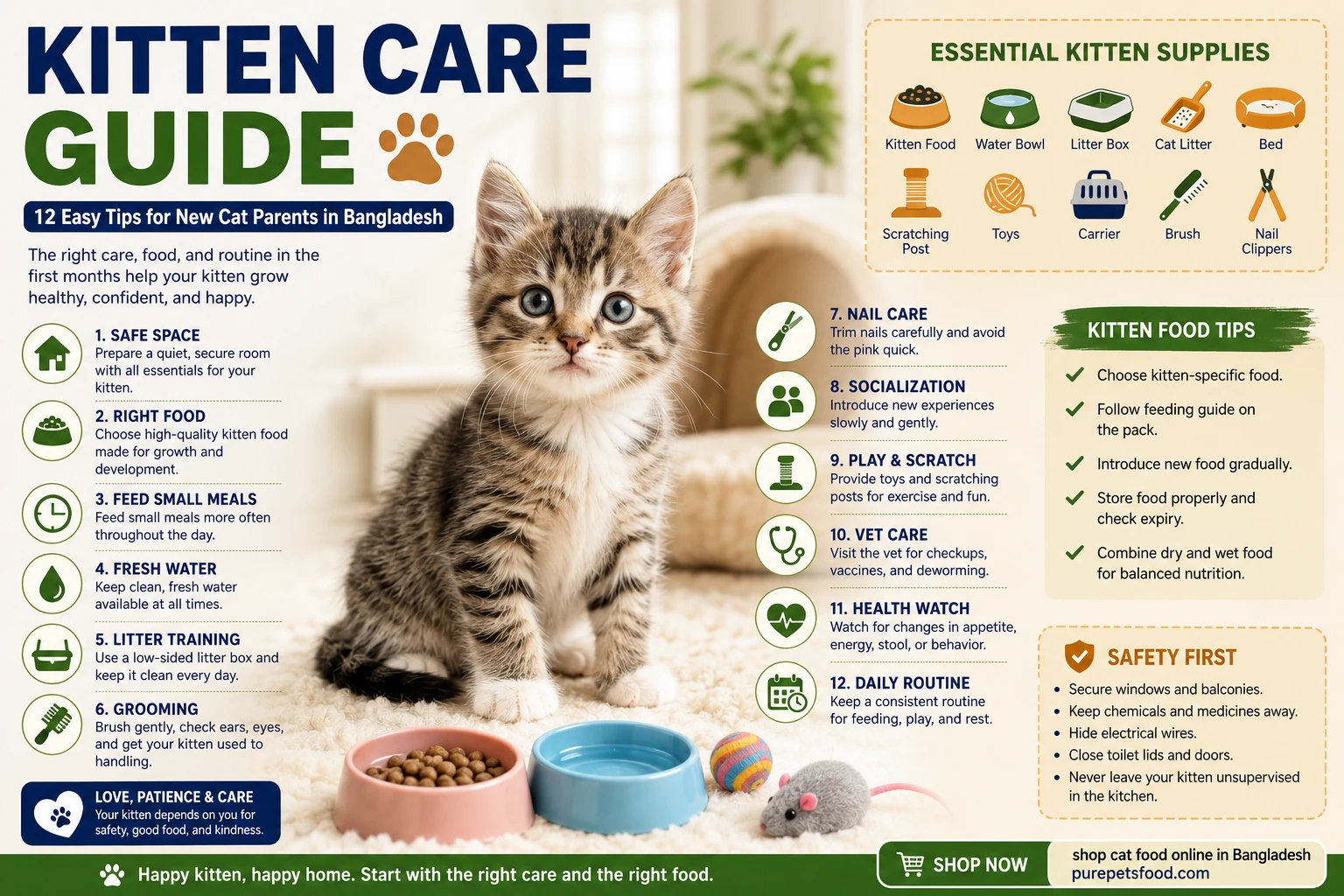
Bringing home a kitten is exciting, but it also comes with real responsibility. This kitten care guide explains how to feed, groom, train, protect, and support your kitten during the first months at home in Bangladesh.
Kittens grow quickly, explore everything, and depend on you for safe food, clean water, warmth, litter habits, social confidence, and early veterinary care. A good routine from the beginning helps your kitten feel secure and makes daily care easier for the whole family.
Why a Kitten Care Guide Matters
A kitten is not just a smaller adult cat. Kittens need more frequent meals, safer spaces, patient training, and closer monitoring. Their stomachs are small, their immune systems are still developing, and their behavior is shaped strongly by early experiences.
For new cat parents in Bangladesh, common challenges include choosing the right kitten food, managing litter training in apartments, keeping kittens safe from balconies, dealing with heat and humidity, and knowing when a health symptom needs veterinary attention.
This guide gives you a practical plan you can follow at home without overcomplicating kitten care.
Kitten Care Guide: 12 Easy Tips for New Owners
1. Prepare a Safe Room First
Before your kitten explores the whole home, prepare one quiet room with food, water, litter box, bed, toys, and hiding space. This helps your kitten adjust slowly without feeling overwhelmed.
Keep electrical wires, plastic bags, small objects, medicines, cleaning liquids, sharp items, and open windows out of reach. In Bangladesh apartments, balconies and open grills are a serious risk, so install secure netting or keep access blocked.
2. Choose Kitten Food, Not Adult Cat Food
Kittens need food made for growth. Kitten food is usually higher in energy and nutrients than adult cat food, helping support normal development during the early life stage.
When buying food, check that the product is suitable for kittens, has a clear feeding guide, and comes from a reliable brand or seller. You can compare suitable options in our kitten food in Bangladesh guide.
3. Feed Small Meals More Often
Kittens have small stomachs and high energy needs, so they usually do better with smaller meals throughout the day. Follow the feeding instructions on the food packaging and adjust based on your kitten’s age, body condition, activity, and veterinary advice.
A sudden diet change can upset the stomach. If you need to switch foods, mix the new food gradually with the old food over several days.
4. Keep Fresh Water Available
Fresh water should always be available. Place water away from the litter box and wash the bowl daily. Some kittens prefer wide bowls because their whiskers do not touch the sides as much.
If your kitten eats mostly dry food, water intake becomes especially important. You may also consider adding wet food when appropriate. Learn more from our wet cat food in Bangladesh guide.
5. Start Litter Training Early
Most kittens learn litter habits quickly when the setup is easy to use. Choose a low-sided litter box so your kitten can enter comfortably. Place it in a quiet, accessible area and keep it clean.
Put your kitten in the litter box after meals, naps, and play sessions. Do not punish accidents. Clean the area properly and guide your kitten back to the box calmly.
6. Build a Gentle Grooming Routine
Short grooming sessions help your kitten get used to being handled. Use a soft brush, gently touch the paws, check the ears, and look around the eyes. This makes future grooming, nail trimming, and vet visits easier.
Long-haired kittens need extra brushing because tangles can form early. Never pull mats or cut close to the skin with scissors. Ask a professional groomer or veterinarian if a mat is tight or painful.
7. Trim Nails Carefully
Start by touching your kitten’s paws gently during calm moments. When your kitten is comfortable, trim only the clear sharp tip of the nail using cat nail clippers. Avoid the pink quick inside the nail.
You do not need to trim all nails in one session. One or two nails at a time is enough for a nervous kitten. Reward calm behavior with praise or a small treat.
8. Socialize with Patience
A well-socialized kitten is usually more confident around people, household sounds, and daily routines. Introduce new experiences slowly: gentle handling, brushing, carrier time, visitors, toys, and normal home noises.
Do not force interaction. Let your kitten approach when ready. Children should be taught to handle kittens gently and avoid pulling tails, grabbing paws, or waking a sleeping kitten suddenly.
9. Provide Scratching and Play
Scratching is normal cat behavior. Provide scratching posts, cardboard scratchers, or sisal surfaces so your kitten has an acceptable place to stretch and maintain claws.
Daily play supports physical exercise and mental stimulation. Wand toys, small balls, and puzzle-style feeding can help reduce boredom. Avoid using your hands as toys because this may encourage biting and scratching later.
10. Schedule Veterinary Care
A veterinarian should check your kitten after adoption, especially if vaccination, deworming, parasite control, or previous health history is unclear. Your vet can guide you on vaccines, deworming, flea control, nutrition, and spay or neuter timing.
For general new cat care advice, Cornell Feline Health Center recommends asking about prior vaccinations, nutrition, parasite control, and grooming, and having a new cat or kitten checked by a veterinarian after coming home. You can read their guidance here: Choosing and Caring for Your New Cat.
11. Watch for Early Warning Signs
Kittens can become unwell quickly. Contact a veterinarian if your kitten has repeated vomiting, diarrhea, refusal to eat, extreme sleepiness, breathing trouble, eye discharge, swollen belly, persistent scratching, pale gums, or sudden behavior change.
Do not give human medicine to a kitten unless a veterinarian specifically instructs you. Many human medicines are dangerous for cats.
12. Keep a Simple Daily Routine
Kittens feel safer when they know what to expect. Feed at regular times, clean the litter box daily, refresh water, schedule play, and provide quiet rest. A predictable routine helps reduce stress and supports good habits.
Kitten Care Checklist by Age
| Kitten Age | Main Care Focus | Food & Routine | Owner Tip |
|---|---|---|---|
| Under 8 weeks | Warmth, safety, mother or specialist feeding support | Needs age-appropriate feeding and close monitoring | Consult a vet if the kitten is orphaned or weak |
| 8–12 weeks | Adjustment, litter training, early vet care | Kitten food in small meals | Keep the kitten in one safe room first |
| 3–6 months | Growth, play, socialization, grooming routine | Continue kitten food and fresh water | Introduce brushing, nail checks, and carrier practice |
| 6–12 months | Healthy habits, safe activity, vet follow-up | Follow feeding guide and body condition | Ask your vet when to transition toward adult food |
Benefits of Proper Kitten Care
- Better growth support: The right food and feeding routine help support normal development.
- Cleaner home habits: Early litter training reduces accidents and confusion.
- Less stress: A safe room and predictable routine help kittens adjust faster.
- Easier grooming: Gentle handling makes brushing, nail care, and health checks easier later.
- Improved safety: Kitten-proofing helps prevent falls, choking, poisoning, and electrical accidents.
- Early problem detection: Daily observation helps you notice appetite, stool, skin, or behavior changes sooner.
Kitten Food Buying Guide for Bangladesh
Food is one of the most important parts of this kitten care guide because nutrition affects growth, energy, coat condition, digestion, and long-term wellbeing. In Bangladesh, kitten owners can usually choose from dry kitten food, wet kitten food, and mixed feeding routines.
What to Look for in Kitten Food
- Kitten-specific label: Choose food made for kittens or growth stage.
- Clear feeding instructions: Packaging should explain portions by age or weight.
- Reliable brand and seller: Buy from trusted pet stores to reduce the risk of poor storage or fake products.
- Good packaging condition: Avoid torn packs, damaged cans, broken seals, or expired products.
- Digestive tolerance: Monitor stool quality, appetite, and energy when introducing any food.
Dry Food vs Wet Food for Kittens
| Option | Best For | Pros | Things to Consider |
|---|---|---|---|
| Dry kitten food | Daily feeding, easy storage, measured portions | Convenient, less messy, budget-friendly for many homes | Fresh water must always be available |
| Wet kitten food | Extra moisture, picky eaters, soft texture preference | Often more appealing and helps add moisture | Needs proper storage after opening |
| Mixed feeding | Owners wanting variety and balanced routine | Combines convenience with moisture support | Portions must be controlled to avoid overfeeding |
For more help choosing the right product type, visit our dry cat food in Bangladesh and wet cat food in Bangladesh guides.
Essential Kitten Supplies
You do not need to buy everything at once, but a few essentials make the first week easier. Focus on safe, practical items that support feeding, toilet habits, sleep, grooming, and play.
- Kitten food suitable for the growth stage
- Food bowl and water bowl
- Low-sided litter box
- Cat litter and litter scoop
- Soft bed or blanket
- Scratching post or scratch board
- Safe toys without small detachable parts
- Cat carrier for vet visits
- Soft brush or grooming glove
- Cat nail clippers
Bangladesh Home Safety Tips for Kittens
Kittens are curious and fast. They can climb curtains, squeeze behind furniture, chew wires, and slip through small gaps. In Bangladesh homes, extra care is needed around balconies, kitchens, bathrooms, mosquito coils, cleaning chemicals, and open stair areas.
- Block balcony access unless the area is fully secured.
- Keep mosquito coils, sprays, and insecticides away from kittens.
- Store medicines and cleaning products inside closed cabinets.
- Close toilet lids and bathroom doors when unsupervised.
- Keep hot pans, tea, and cooking oil away from counters where kittens can jump.
- Check washing machines, cupboards, and drawers before closing them.
- Use cable covers or hide loose wires.
Common Kitten Care Mistakes
- Feeding adult cat food too early: Kittens need growth-stage nutrition.
- Changing food suddenly: Fast changes can upset the stomach.
- Skipping vet visits: Vaccination, deworming, and parasite advice should come from a veterinarian.
- Using punishment for litter accidents: Calm guidance works better than fear.
- Letting kittens roam unsafe balconies: Falls can happen quickly.
- Overfeeding treats: Treats should not replace balanced kitten food.
- Ignoring behavior changes: Sudden hiding, weakness, or appetite loss needs attention.
Expert Tips for First-Time Kitten Owners
- Keep your kitten’s first few days calm and quiet.
- Use the same food at first if you know what the kitten was eating before adoption.
- Introduce new food gradually.
- Clean the litter box daily so your kitten wants to use it.
- Practice short carrier sessions before vet visits.
- Play every day, but allow plenty of sleep.
- Keep a small notebook for vaccine dates, deworming, food changes, and symptoms.
When to Contact a Veterinarian
Contact a veterinarian if your kitten refuses food, has repeated vomiting or diarrhea, seems unusually weak, has breathing difficulty, has discharge from the eyes or nose, cries during urination, has swollen gums, or shows signs of injury.
Young kittens can decline faster than adult cats, so it is safer to ask for professional advice early. Do not rely on home remedies for serious symptoms.
FAQ About Kitten Care Guide
What is the most important part of kitten care?
The most important parts are safe housing, proper kitten food, clean water, litter training, gentle socialization, and early veterinary care. All of these work together to support healthy development.
How many times should I feed a kitten?
Kittens usually need smaller meals more often than adult cats. Follow the feeding guide on the kitten food packaging and ask your veterinarian for advice based on age, weight, and health condition.
Can kittens eat adult cat food?
Adult cat food is not ideal for young kittens because kittens need food designed for growth. Choose kitten-specific food until your veterinarian or product guide recommends transitioning.
How do I litter train a kitten?
Use a low-sided litter box, place it in a quiet area, and put your kitten in the box after meals, naps, and play. Keep the box clean and avoid punishment after accidents.
When should I take my kitten to the vet?
Take your kitten to a veterinarian soon after adoption, especially if vaccination, deworming, parasite control, or previous health records are unclear.
What should I buy before bringing a kitten home?
Prepare kitten food, bowls, litter box, litter, bed, carrier, scratching post, safe toys, grooming brush, and nail clippers. A secure room is also important for the first few days.
Final Thoughts on This Kitten Care Guide
A good kitten care guide starts with simple daily habits: feed the right food, keep fresh water available, clean the litter box, make your home safe, play gently, and contact a veterinarian when symptoms appear.
Your kitten does not need a perfect home. Your kitten needs a safe, clean, loving, and consistent home. With the right food, routine, and care, you can help your kitten grow into a confident and healthy adult cat.