

 Dry Cat Food
 Cat Wet Food
 Adult Cat Food
 Kitten Food
 Canned Cat Food
 Cat Pouch Food
 Cat Treats
 Cat Litter Scoop
 Cat Litter Box
 Clumping Cat Litter

 Kitten Milk Replacer
 Cat Deworming Products
 Cat Shampoo
 Cat Bathing
 Cat External Care Products
 Cat Hygiene Products
 Cat Cleanup & Odor Control
 Cat Supplement Products
 Cat Toothbrushes
 Puppy Training
 Cat Feeder
 Cat Grooming
 Catnip
 Cat Food Bowl
 Cat Bow Ties
 Cat Collar
 Cat Harnesses
 Cat Scratchers
 Cat Sunglasses
 Puppy Food
 Adult Dog Food
 Dog Toys
 Dog Harnesses
 Dog Shampoo
 Dog Vitamins and Supplements
 Dog External Care Products
 Rabbit Adult Food
 Rabbit Accessories
 Rabbit Junior Food


 Pet Bed, Carrier & House
 Cat Dress & Tshirt
 Pet Houses
Cat Grooming Tips for Healthy, Clean & Happy Cats

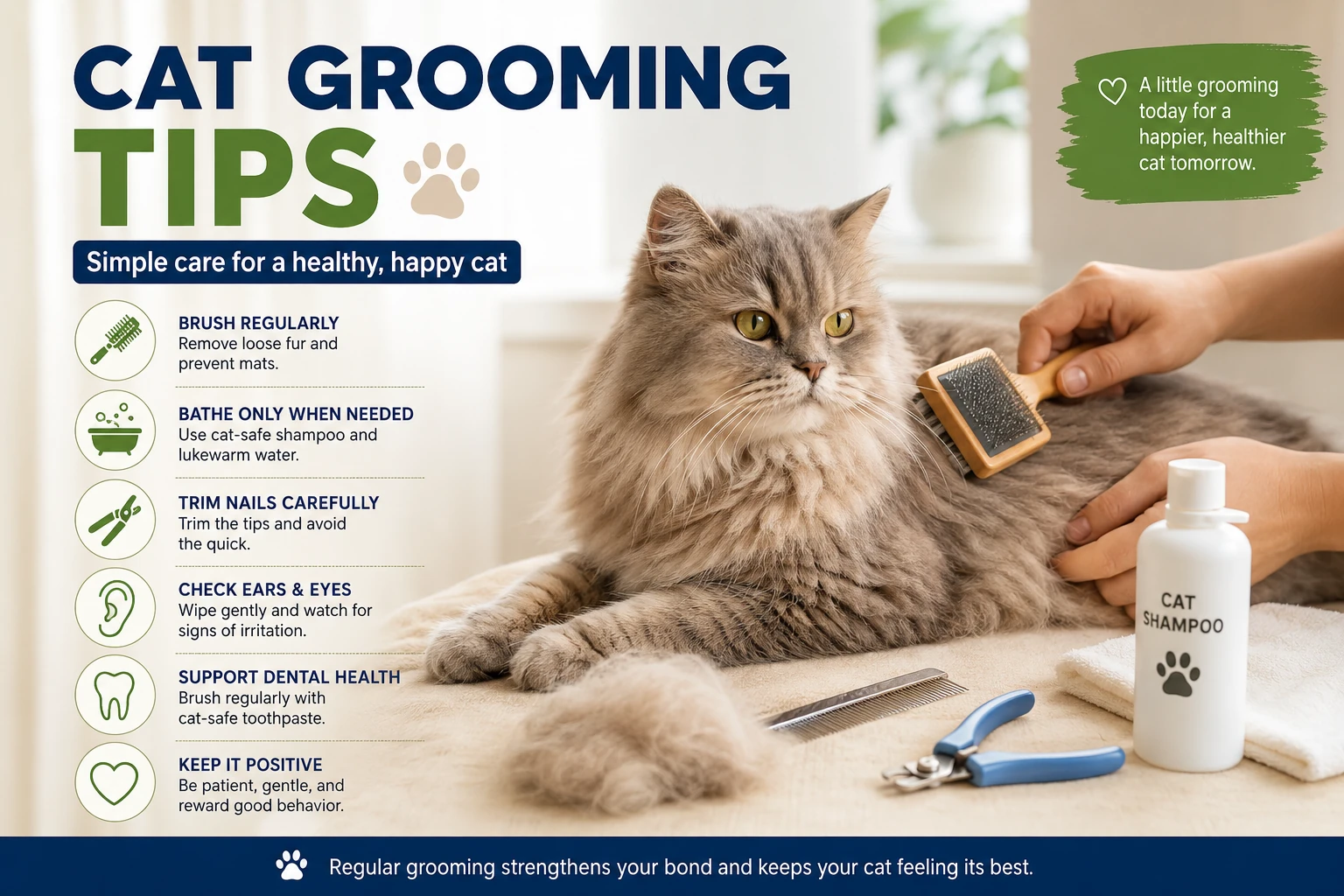
Good grooming keeps your cat clean, comfortable, and easier to care for at home. These cat grooming tips are written for cat parents in Bangladesh who want practical advice on brushing, bathing, nail trimming, shedding control, and everyday coat care without stressing their cat.
Cats are naturally clean animals, but they still need help from their owners—especially long-haired breeds, kittens learning routines, senior cats, indoor cats, and cats that shed heavily during humid weather. A simple grooming routine can reduce loose fur, prevent painful mats, support skin health, and help you notice problems early.
Why Cat Grooming Matters
Grooming is not just about making your cat look neat. It helps remove dead hair, spreads natural oils through the coat, reduces tangles, and gives you a chance to check the skin, paws, ears, and teeth. For indoor cats in Bangladesh, grooming is also useful because dust, humidity, and seasonal shedding can quickly make the coat feel greasy or tangled.
Regular grooming also builds trust. When your cat learns that brushing, nail checks, and gentle handling are normal, daily care becomes easier. The key is to keep sessions short, calm, and positive instead of forcing your cat through a long grooming session.
Cat Grooming Tips Every Owner Should Know
1. Start with Short Grooming Sessions
Begin with two to five minutes at a time. Let your cat sniff the brush, touch one small area, then stop before your cat becomes irritated. This is especially important for rescued cats, nervous cats, and kittens that are still learning to accept handling.
Do not wait until the coat is badly tangled. A cat that only experiences grooming when mats are painful may start hiding, scratching, or biting whenever the brush appears.
2. Brush According to Coat Type
Short-haired cats usually need brushing once or twice a week. Long-haired cats, Persian cats, and cats with thick undercoats may need brushing several times a week or even daily. Use slow strokes and focus on areas where mats form easily, such as behind the ears, under the legs, around the chest, and near the tail.
If you care for a Persian, coat maintenance is more demanding. You may also find our Persian cat food guide useful because coat condition is influenced by both grooming and nutrition.
3. Use the Right Brush
Not every brush suits every cat. A soft-bristle brush or grooming glove can work well for short-haired cats. A wide-tooth comb can help with longer coats. A slicker brush may remove loose fur, but it should be used gently because hard pressure can irritate the skin.
Choose a brush that matches your cat’s coat and tolerance level. If your cat hates one tool, try another instead of forcing the same brush every day.
4. Check for Mats Before They Become Painful
Mats are tight knots of fur that can pull on the skin. They often form in long-haired cats, overweight cats, senior cats, and cats that cannot groom themselves properly. Small tangles may be loosened with a comb, but tight mats should not be cut with scissors at home because cat skin is thin and easy to injure.
If a mat is close to the skin, ask a veterinarian or professional groomer for help. Never pull hard on tangled fur.
5. Do Not Bathe Cats Too Often
Most cats do not need regular baths because they clean themselves naturally. Bathing too often can dry the skin, create stress, and make grooming harder in the future. A bath may be needed if your cat gets something sticky, oily, dirty, or unsafe on the coat, or if your veterinarian recommends it for a specific reason.
When bathing is necessary, use lukewarm water, a cat-safe shampoo, and a quiet room. Avoid the eyes, ears, and nose. Rinse thoroughly because leftover shampoo can irritate the skin.
6. Trim Nails Carefully
Cat nail trimming helps reduce accidental scratches and keeps claws from becoming too sharp. Use cat nail clippers and trim only the clear sharp tip. Avoid the pink area inside the nail, called the quick, because cutting it can cause pain and bleeding.
If your cat is nervous, trim one or two nails per session instead of doing all paws at once. Reward calm behavior with praise or a small treat. Scratching posts are also helpful because they allow cats to maintain their claws naturally.
7. Clean Around the Eyes Gently
Some cats, especially flat-faced breeds, may develop tear stains or small eye discharge. Wipe gently with a clean, damp cotton pad. Use a separate pad for each eye to avoid spreading irritation.
If you notice swelling, redness, yellow discharge, constant squinting, or sudden changes in the eyes, contact a veterinarian. Grooming should never replace medical care when symptoms appear.
8. Check the Ears, But Do Not Dig Deep
Healthy cat ears are usually clean with only a small amount of wax. Look for redness, strong smell, heavy wax, scratching, or head shaking. Do not push cotton buds deep into the ear canal because this can cause injury.
If the ears look dirty or irritated, use a vet-recommended ear cleaner or speak with a veterinarian first. Ear mites, infections, and allergies need proper diagnosis.
9. Support Dental Hygiene
Grooming also includes mouth care. Bad breath, drooling, red gums, difficulty chewing, and visible tartar can signal dental problems. Use cat-safe toothpaste only; human toothpaste is not safe for cats.
Start slowly by letting your cat taste cat toothpaste, then introduce a finger brush or soft pet toothbrush. If your cat refuses brushing, ask your veterinarian about safe dental alternatives.
10. Reduce Shedding and Hairballs
Loose fur can increase during seasonal changes and humid weather. Brushing removes dead hair before your cat swallows it during self-grooming. This may help reduce hairballs, especially in long-haired and indoor cats.
Diet can also support coat condition. If your cat struggles with frequent hairballs, read our guide to hairball control cat food and speak with a veterinarian if vomiting is frequent, severe, or sudden.
11. Keep Grooming Positive
Never punish your cat for resisting grooming. Stop before your cat becomes highly stressed. Use a calm voice, gentle touch, and rewards. The best grooming routine is one your cat can accept regularly.
For extra guidance on making grooming comfortable, you can read this helpful grooming advice from International Cat Care. It explains how to approach grooming in a cat-friendly way.
Cat Grooming Needs by Coat Type
| Cat Type | Grooming Frequency | Best Tools | Extra Care Needed |
|---|---|---|---|
| Short-haired cats | 1–2 times weekly | Soft brush, grooming glove | Shedding control and skin checks |
| Long-haired cats | 3–7 times weekly | Wide-tooth comb, slicker brush | Mat prevention behind ears and under legs |
| Persian cats | Daily or near daily | Comb, gentle brush, eye wipes | Tear stains, mats, and coat hygiene |
| Kittens | Short sessions weekly | Soft brush, gentle handling | Building trust and routine |
| Senior cats | 2–4 times weekly | Soft brush, comb | Stiff joints, reduced self-grooming |
| Indoor cats | 1–3 times weekly | Brush, nail clippers | Hairballs, shedding, nail maintenance |
Benefits of Regular Cat Grooming
- Less shedding: Brushing removes loose hair before it spreads around your home.
- Fewer tangles: Regular coat care prevents mats from becoming painful.
- Better skin checks: You can notice fleas, wounds, bumps, irritation, or dandruff earlier.
- Cleaner paws and nails: Nail trimming and paw checks make home care easier.
- Hairball support: Removing loose fur may reduce the amount of hair your cat swallows.
- Stronger bonding: Gentle grooming can become a calm routine between you and your cat.
Cat Grooming Supplies Buying Guide
When buying grooming supplies in Bangladesh, choose safe, cat-specific products instead of using random household items. Cats have sensitive skin and may react badly to harsh shampoos, strong fragrances, or sharp tools.
Essential Grooming Tools
- Cat brush or comb: Choose according to coat length and thickness.
- Cat nail clippers: Small, sharp clippers give better control than human nail cutters.
- Cat-safe shampoo: Use only when bathing is genuinely needed.
- Soft towel: Useful for drying and wrapping nervous cats gently.
- Eye wipes or damp cotton pads: Helpful for light cleaning around the eyes.
- Dental kit: Use cat-safe toothpaste and a soft pet toothbrush.
What to Avoid
- Human shampoo, medicated soap, or detergent
- Strong perfume sprays on the coat
- Cutting mats close to the skin with scissors
- Forcing a bath when brushing is enough
- Using cotton buds deep inside the ear
- Buying very sharp de-shedding tools without knowing how to use them
Bangladesh Market Context: What Cat Owners Should Consider
Cat parents in Bangladesh often deal with dust, humidity, apartment living, and seasonal shedding. Long-haired breeds may need extra care because mats can form faster in humid weather. Indoor cats may also shed heavily onto beds, sofas, and clothing, so a simple brushing routine is worth maintaining.
Another important factor is product quality. When shopping for grooming tools or daily cat care items, choose reliable pet products from trusted sellers. For food-related coat support, compare options through our cat food brands in Bangladesh guide or check the latest products in our cat food category.
If your cat has dry skin, dull coat, frequent vomiting, bald patches, or constant scratching, do not rely on grooming products alone. These signs may be related to parasites, allergies, nutrition, stress, or illness. A veterinarian can help identify the real cause.
Nutrition and Grooming: Why Food Matters
Grooming works from the outside, while nutrition supports your cat from the inside. A balanced diet can help maintain normal skin, coat shine, energy, and overall wellbeing. If your cat’s coat looks dull or shedding suddenly increases, review both grooming habits and food quality.
New cat owners can start with our cat feeding guide. For age-specific needs, you may also compare kitten food in Bangladesh and senior cat food options.
Common Cat Grooming Mistakes
- Brushing only when the coat is tangled: Prevention is easier and safer than removing painful mats.
- Bathing too often: Most cats do not need frequent baths unless there is a specific reason.
- Using dog or human products: Cats need cat-safe grooming products.
- Ignoring nail care: Overgrown nails can become uncomfortable and may catch on fabric.
- Forcing grooming during stress: A scared cat may become defensive. Try again later when your cat is calm.
- Missing health signs: Bald spots, sores, bad smell, or sudden coat changes need attention.
Expert Tips for Stress-Free Grooming
- Groom after playtime or meals when your cat is more relaxed.
- Place your cat on a non-slip surface for better confidence.
- Brush in the direction of hair growth.
- Check sensitive areas gently instead of pulling the coat.
- Keep treats nearby and reward calm behavior.
- End every session before your cat becomes angry or frightened.
- For long-haired cats, maintain a regular routine instead of waiting for mats.
Safety Recommendations
Safety should always come first. Stop grooming if your cat is panting, growling, hiding, swatting repeatedly, or trying hard to escape. Do not use essential oils, harsh chemicals, flea treatments, or medicated shampoos unless they are specifically approved for cats.
Contact a veterinarian if you notice bleeding, skin wounds, swelling, ear smell, eye discharge, heavy dandruff, sudden hair loss, repeated vomiting of hairballs, or any major behavior change. Grooming can help you spot problems early, but it cannot replace veterinary care.
FAQ About Cat Grooming Tips
How often should I groom my cat?
Short-haired cats usually need brushing once or twice a week. Long-haired cats may need brushing several times a week or daily, especially if they develop tangles easily.
Do cats need baths?
Most cats do not need regular baths. Bathe your cat only when necessary, such as when the coat has something sticky, oily, dirty, or unsafe on it, or when your veterinarian recommends it.
What brush is best for cat grooming at home?
A soft brush or grooming glove works well for many short-haired cats. Long-haired cats often need a wide-tooth comb and a gentle slicker brush to prevent mats.
Can grooming help with cat hairballs?
Yes, brushing removes loose fur before your cat swallows it during self-grooming. If hairballs are frequent, severe, or linked with vomiting, speak with a veterinarian.
How do I trim my cat’s nails safely?
Use cat nail clippers and trim only the clear sharp tip. Avoid the pink quick inside the nail. If your cat is nervous, trim one or two nails at a time.
Why does my cat hate grooming?
Your cat may dislike grooming because of past stress, painful mats, sensitive skin, or the wrong brush. Start with short sessions and use gentle tools. If grooming seems painful, consult a veterinarian.
Final Thoughts on Cat Grooming Tips
The best cat grooming tips are simple: brush regularly, handle your cat gently, use safe tools, avoid unnecessary baths, and watch for health changes. Grooming should feel calm and routine, not forced. With patience, most cats can learn to accept basic home care.
Healthy grooming also works best with proper nutrition. Choose quality cat food that supports your cat’s age, lifestyle, and coat needs.


