

 Dry Cat Food
 Cat Wet Food
 Adult Cat Food
 Kitten Food
 Canned Cat Food
 Cat Pouch Food
 Cat Treats
 Cat Litter Scoop
 Cat Litter Box
 Clumping Cat Litter

 Kitten Milk Replacer
 Cat Deworming Products
 Cat Shampoo
 Cat Bathing
 Cat External Care Products
 Cat Hygiene Products
 Cat Cleanup & Odor Control
 Cat Supplement Products
 Cat Toothbrushes
 Puppy Training
 Cat Feeder
 Cat Grooming
 Catnip
 Cat Food Bowl
 Cat Bow Ties
 Cat Collar
 Cat Harnesses
 Cat Scratchers
 Cat Sunglasses
 Puppy Food
 Adult Dog Food
 Dog Toys
 Dog Harnesses
 Dog Shampoo
 Dog Vitamins and Supplements
 Dog External Care Products
 Rabbit Adult Food
 Rabbit Accessories
 Rabbit Junior Food


 Pet Bed, Carrier & House
 Cat Dress & Tshirt
 Pet Houses
Complete Cat Feeding Guide Bangladesh
Quick Answer: Most adult cats need approximately 50–90g of dry food daily depending on body weight, activity level and calorie content. Kittens require 3–5 meals per day while adult cats generally thrive on two meals daily.
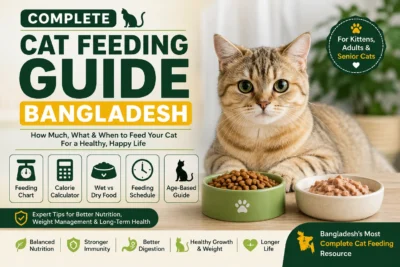
Complete cat feeding guide with feeding charts, calorie calculator, feeding schedules and nutrition tips.
Proper nutrition is one of the most important factors in keeping your cat healthy, active, and happy. Whether you have a playful kitten, an active adult cat, or a senior feline companion, feeding the right food in the correct amount is essential for maintaining healthy body weight, supporting digestion, strengthening immunity, and promoting long-term wellbeing.
Many cat owners in Bangladesh ask questions such as:
- How much food should I feed my cat?
- How many times a day should cats eat?
- Should I feed wet food or dry food?
- Can I mix wet and dry food?
- What is the best feeding schedule for kittens?
Why Proper Cat Feeding Matters
Cats are obligate carnivores, meaning they require animal-based protein to thrive. A balanced diet supports healthy growth, strong muscles, proper digestion, healthy skin and coat, weight management, and a strong immune system.
- Healthy growth and development
- Strong muscles and bones
- Healthy skin and shiny coat
- Better digestion
- Weight management
- Strong immunity
- Long-term health
Cat Feeding Guide At A Glance
- Adult Cats: 2 meals daily
- Kittens: 3–5 meals daily
- Fresh Water: Always available
- Dry Food: 50–90g average daily
- Wet Food: Supports hydration
- Avoid toxic human foods
Understanding Cat Nutrition
Protein
Protein is the most important nutrient in a cat’s diet. High-quality protein helps maintain muscle mass, supports growth, and provides energy.
- Chicken
- Tuna
- Salmon
- Turkey
- Ocean Fish
Taurine
Taurine is an essential amino acid that supports heart health, eye health, immune function, and reproductive health. Cats cannot produce enough taurine naturally and must obtain it through their diet.
Healthy Fats
Healthy fats provide energy and support brain function, skin health, and a shiny coat.
Vitamins and Minerals
Essential vitamins and minerals support metabolism, bone growth, organ function, and overall health.
Foods Cats Should Never Eat
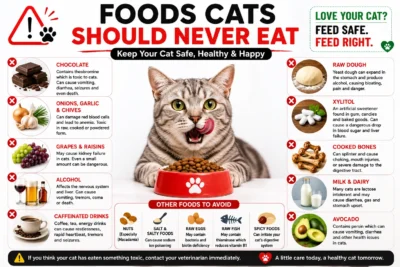
Common toxic foods that should never be fed to cats.
While cats can enjoy a wide variety of nutritious foods, certain human foods can be dangerous and even toxic to them. Feeding inappropriate foods may cause digestive problems, poisoning, organ damage, or life-threatening health complications. Every cat owner should know which foods to avoid to keep their feline companion safe and healthy.
If you are unsure whether a food is safe for your cat, it is always best to consult your veterinarian before offering it. Providing a nutritionally balanced cat food diet is the safest way to meet your cat’s nutritional needs.
Chocolate
Chocolate contains theobromine and caffeine, both of which are toxic to cats. Even small amounts may cause vomiting, diarrhea, increased heart rate, tremors, seizures, or serious heart complications.
Onions, Garlic, and Chives
These ingredients can damage a cat’s red blood cells and may lead to anemia. They are harmful whether raw, cooked, powdered, or included in processed foods.
Grapes and Raisins
Although the exact toxic compound remains unknown, grapes and raisins may cause kidney failure in pets. It is safest to completely avoid feeding them to cats.
Alcohol
Alcohol is extremely dangerous for cats and can affect the nervous system, breathing, and liver function. Even small amounts can be toxic.
Caffeinated Drinks
Coffee, tea, energy drinks, and other caffeinated products may cause restlessness, rapid heartbeat, tremors, seizures, and serious health emergencies in cats.
Raw Dough
Raw yeast dough can expand inside a cat’s stomach and produce alcohol during fermentation, creating a potentially dangerous situation that requires immediate veterinary attention.
Xylitol
Xylitol is an artificial sweetener commonly found in sugar-free gum, candies, and some baked goods. Pets should never consume products containing xylitol.
Cooked Bones
Cooked bones can splinter easily and may cause choking, mouth injuries, digestive tract damage, or intestinal blockages.
Milk and Dairy Products
Many adult cats are lactose intolerant. Milk, cream, and certain dairy products may cause diarrhea, bloating, and digestive upset.
Fat Trimmings and Fried Foods
Excessively fatty foods can contribute to obesity, digestive upset, and pancreatitis. Cats should receive balanced nutrition from high-quality cat food rather than table scraps.
Safe Alternatives for Cats
- Complete and balanced cat food
- High-quality kitten food
- Wet cat food
- Dry cat food
- Cat treats designed specifically for cats
- Veterinarian-approved nutritional supplements
For the best nutrition, choose high-quality cat food appropriate for your cat’s age, weight, and health condition. Explore our guides on Cat Food Bangladesh, Kitten Food in Bangladesh, and Wet Cat Food in Bangladesh to learn more about safe and balanced feeding options.
Cat Feeding Guide By Age
Feeding Kittens (0–12 Months)
Kittens require significantly more calories and nutrients than adult cats because of their rapid growth and development.
| Kitten Age | Meals Per Day |
|---|---|
| 1–2 Months | 4–5 Meals |
| 2–4 Months | 4 Meals |
| 4–6 Months | 3–4 Meals |
| 6–12 Months | 2–3 Meals |
Related Guide: Kitten Food in Bangladesh
Feeding Adult Cats (1–7 Years)
Most healthy adult cats thrive on a consistent feeding schedule and nutritionally complete cat food.
Most adult cats do well with two meals per day.
Related Guides:
Feeding Senior Cats (7+ Years)
Senior cats may require additional support for weight management, hydration, digestion, and joint health.
| Age | Meals Per Day |
|---|---|
| Senior Cats | 2–3 Small Meals |
Related Guide: Senior Cat Food Bangladesh
How Much Should A Kitten Eat?
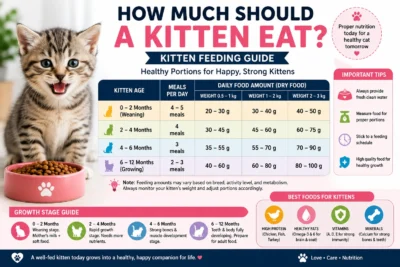
Kitten feeding schedule and portion guide from weaning to adulthood.
Kittens grow incredibly fast during their first year of life and require significantly more calories, protein, vitamins, and minerals than adult cats. Providing the correct amount of food during this critical growth period helps support healthy bone development, strong muscles, brain development, and a strong immune system.
The amount a kitten should eat depends on several factors, including age, weight, activity level, and the type of food being fed. Most kittens need multiple small meals throughout the day because their stomachs are small and they burn energy quickly.
Kitten Feeding Chart By Age
| Kitten Age | Meals Per Day | Feeding Recommendation |
|---|---|---|
| 1–2 Months | 4–5 Meals | Kitten food or kitten milk replacer |
| 2–4 Months | 4 Meals | High-protein kitten food |
| 4–6 Months | 3–4 Meals | Growth-focused kitten diet |
| 6–12 Months | 2–3 Meals | Complete kitten food formula |
How Much Dry Food Should A Kitten Eat?
The exact amount varies by brand, but as a general guideline:
| Kitten Weight | Approximate Dry Food Per Day |
|---|---|
| 1 kg | 25–35g |
| 2 kg | 40–60g |
| 3 kg | 55–80g |
| 4 kg | 70–100g |
Always follow the feeding guide printed on the packaging because calorie levels vary between brands and formulas.
Best Food For Growing Kittens
Kittens need specially formulated food that contains higher levels of protein, fat, DHA, calcium, and essential vitamins to support healthy growth and development.
- Royal Canin Kitten
- SmartHeart Kitten
- Me-O Kitten
- Reflex Kitten
- Nekko Kitten
- Bellotta Kitten
- Kaniva Kitten
Related Guide: Kitten Food in Bangladesh
Signs Your Kitten Is Eating Enough
- Steady weight gain
- Healthy appetite
- Active and playful behavior
- Bright eyes and healthy coat
- Normal digestion and stool quality
If your kitten appears underweight, lethargic, or is not growing properly, consult a veterinarian and review the feeding routine.
Quick Answer: Most kittens require 3–5 meals daily and should eat a high-quality kitten food formulated for growth. The exact amount depends on age, weight, and activity level, but growing kittens generally require more calories per kilogram of body weight than adult cats.
Cat Feeding Chart By Weight
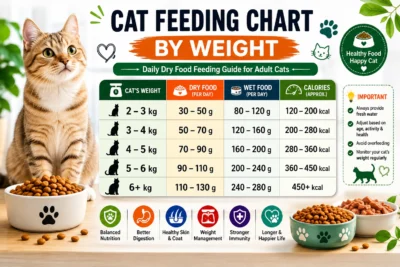
Daily feeding chart showing recommended food amounts based on cat weight.
The exact amount of food depends on your cat’s age, weight, activity level, health condition, and the calorie density of the food.
| Cat Weight | Daily Food Requirement |
|---|---|
| 2–3 kg | 30–50g Dry Food |
| 3–4 kg | 50–70g Dry Food |
| 4–5 kg | 70–90g Dry Food |
| 5–6 kg | 90–110g Dry Food |
Featured Snippet Answer: Most adult cats weighing between 3–5kg typically require around 50–90g of dry food daily depending on activity level and food calorie content.
Cat Feeding Calculator
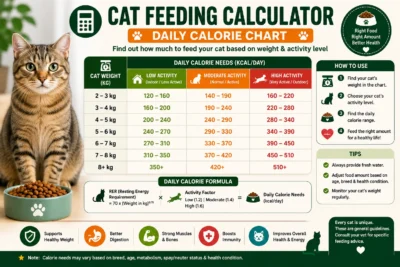
Daily calorie calculator chart for cats based on weight and activity level.
Every cat has unique nutritional requirements based on age, weight, activity level, metabolism, and overall health condition. While feeding guidelines on cat food packaging provide a useful starting point, understanding your cat’s daily calorie needs can help you maintain a healthy body weight and prevent overfeeding or underfeeding.
Use the following cat feeding calculator chart as a general guideline for estimating your cat’s daily calorie requirements. Actual needs may vary depending on breed, lifestyle, and health status.
| Cat Weight | Estimated Daily Calories |
|---|---|
| 2 kg | 120–160 Calories |
| 3 kg | 180–220 Calories |
| 4 kg | 220–270 Calories |
| 5 kg | 250–320 Calories |
| 6 kg | 300–370 Calories |
Factors That Affect Your Cat’s Calorie Needs
- Age (kitten, adult, or senior)
- Activity level
- Indoor or outdoor lifestyle
- Body condition score
- Spayed or neutered status
- Pregnancy or nursing
- Health conditions and veterinary recommendations
How To Use This Feeding Calculator
Check the calorie content listed on your cat food packaging and divide your cat’s daily calorie requirement by the calories per serving. This will help estimate the correct portion size. Always adjust feeding amounts based on your cat’s body condition and activity level.
Featured Snippet Answer: A healthy adult cat weighing 4kg typically requires approximately 220–270 calories per day, while a 5kg cat generally needs around 250–320 calories daily depending on activity level and metabolism.
For age-specific feeding recommendations, see our Kitten Food Guide, Senior Cat Food Guide, and Cat Food Bangladesh resources.
Indoor Cat Feeding Guide
Indoor cats generally require fewer calories than outdoor cats because they are less active and expend less energy throughout the day. Without proper portion control, indoor cats can easily gain excess weight, increasing the risk of obesity, diabetes, and joint problems.
Most indoor cats thrive on measured meals rather than free feeding. Choosing a high-quality indoor cat food formula can help support weight management, digestion, and hairball control.
- Feed measured portions daily
- Monitor body weight regularly
- Provide interactive play sessions
- Ensure fresh water is always available
- Choose age-appropriate nutrition
Related Guide: Indoor Cat Food Bangladesh
Wet Food vs Dry Food
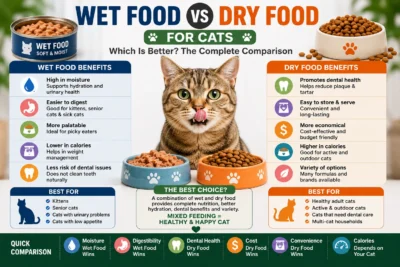
Comparison of wet cat food and dry cat food benefits and feeding recommendations.
One of the most common questions cat owners ask is whether wet food or dry food is better. The truth is that both have benefits, and the best choice depends on your cat’s age, health condition, activity level, and preferences.
Dry Cat Food Benefits
- Easy to store and serve
- Cost-effective for daily feeding
- Convenient portion control
- Long shelf life
- May help support dental health through chewing
Dry cat food is a practical option for most cat owners in Bangladesh and is available in kitten, adult, senior, urinary care, indoor, and grain-free formulas.
Related Guide: Dry Cat Food in Bangladesh
Wet Cat Food Benefits
- Higher moisture content
- Supports hydration
- Highly palatable
- Easier to chew for kittens and senior cats
- Helpful for cats with urinary concerns
Wet cat food is especially beneficial for cats that do not drink enough water throughout the day.
Related Guide: Wet Cat Food in Bangladesh
Which Is Better?
Neither wet nor dry food is universally better. The ideal choice depends on your cat’s individual needs. Many veterinarians recommend combining both food types to achieve balanced nutrition and better hydration.
Mixed Feeding Method
Mixed feeding combines dry cat food and wet cat food in the same daily feeding routine. This approach allows cats to enjoy the benefits of both food types.
Benefits of Mixed Feeding
- Improved hydration
- Greater nutritional variety
- Better appetite stimulation
- Flexible feeding routine
- Enhanced feeding satisfaction
Example Mixed Feeding Schedule:
- Morning: Dry Cat Food
- Evening: Wet Cat Food
This feeding style is becoming increasingly popular among cat owners in Bangladesh.
Daily Cat Feeding Schedule Example
Kitten Feeding Schedule
| Time | Meal |
|---|---|
| 7:00 AM | Breakfast |
| 12:00 PM | Lunch |
| 4:00 PM | Snack |
| 8:00 PM | Dinner |
Adult Cat Feeding Schedule
| Time | Meal |
|---|---|
| 7:00 AM | Breakfast |
| 7:00 PM | Dinner |
Senior Cat Feeding Schedule
| Time | Meal |
|---|---|
| 7:00 AM | Breakfast |
| 2:00 PM | Small Meal |
| 8:00 PM | Dinner |
How To Transition To A New Cat Food
Changing your cat’s food too quickly may cause digestive upset. A gradual transition helps your cat adjust comfortably to a new diet.
| Day | Old Food | New Food |
|---|---|---|
| Day 1–2 | 75% | 25% |
| Day 3–4 | 50% | 50% |
| Day 5–6 | 25% | 75% |
| Day 7+ | 0% | 100% |
Common Cat Feeding Mistakes
Even experienced cat owners sometimes make feeding mistakes that can affect long-term health.
1. Overfeeding
Providing too much food can lead to obesity, diabetes, joint problems, and reduced lifespan.
2. Free Feeding Without Portion Control
Leaving unlimited food available all day may encourage overeating and unhealthy weight gain.
3. Sudden Food Changes
Switching cat food abruptly can cause digestive upset. Transition gradually over 7–10 days.
4. Feeding Human Food
Many human foods contain ingredients that are not suitable for cats and may cause digestive or health issues.
5. Not Providing Enough Water
Fresh, clean water should always be available, especially when feeding dry food.
Persian Cat Feeding Guide
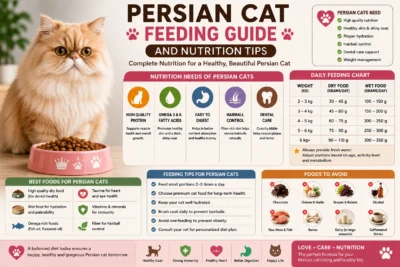
Nutrition, feeding schedule and dietary recommendations for Persian cats.
Persian cats have unique nutritional needs due to their long coats, indoor lifestyle, and tendency to develop hairballs. A balanced diet rich in protein, omega fatty acids, and digestive support nutrients can help maintain healthy skin, coat quality, and overall wellbeing.
- Choose high-quality protein sources
- Support skin and coat health
- Help reduce hairball formation
- Maintain healthy weight
- Provide fresh water daily
Related Resources:
Signs Your Cat Is Eating the Right Amount
- Healthy body weight
- Good muscle condition
- Healthy skin and coat
- Consistent energy levels
- Normal digestion
- Healthy appetite
If your cat gains or loses weight unexpectedly, consult a veterinarian and review your feeding routine.
Best Cat Food Brands In Bangladesh
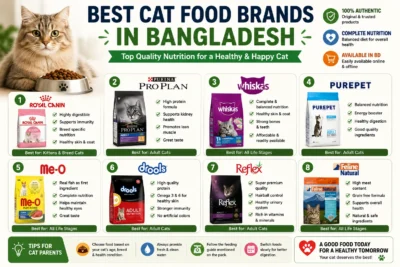
Popular cat food brands available in Bangladesh for kittens, adult cats and senior cats.
Bangladesh offers a wide range of cat food brands suitable for kittens, adults, seniors, indoor cats, and cats with special dietary requirements. Choosing the right food depends on your cat’s age, breed, activity level, and health condition. You can also explore our detailed guides on Cat Food Price In Bangladesh, Best Cat Food In Bangladesh, and Cat Food Brands In Bangladesh.
- Royal Canin Cat Food Bangladesh
- Whiskas Cat Food Bangladesh
- SmartHeart Cat Food Bangladesh
- Me-O Cat Food Bangladesh
- Reflex Cat Food Bangladesh
- Bonacibo Cat Food Bangladesh
- Kaniva Cat Food Bangladesh
- Drools Cat Food Bangladesh
- Nekko Cat Food
- Bellotta Cat Food
- Wanpy Cat Food
Specialized Cat Food Options
- Grain Free Cat Food
- Hairball Control Cat Food
- Urinary Care Cat Food
- Indoor Cat Food
- Senior Cat Food
- Kitten Food In Bangladesh
- Wet Cat Food In Bangladesh
- Dry Cat Food In Bangladesh
- Persian Cat Food In Bangladesh
Urinary Care Cat Feeding Guide
Urinary health is a major concern for many cats, especially indoor cats and those with a history of urinary tract problems. Proper hydration, balanced nutrition, and maintaining a healthy body weight can help support urinary tract health and reduce the risk of urinary complications.
Signs Of Urinary Problems In Cats
- Frequent urination
- Difficulty urinating
- Blood in urine
- Urinating outside the litter box
- Excessive licking around the urinary area
Cats with urinary sensitivity may benefit from specialized diets, increased water intake, and regular veterinary checkups. Wet food can help increase moisture consumption, which is important for maintaining urinary tract health.
Related Guides: Urinary Care Cat Food | Wet Cat Food In Bangladesh | Indoor Cat Food
For more feeding recommendations, see our Complete Cat Food Guide, Cat Food Price Guide, and Cat Feeding Guide.
Hairball Control Cat Feeding Guide
Hairballs are common in long-haired breeds such as Persian cats. Cats naturally swallow loose hair while grooming, and excessive hair accumulation can lead to hairball formation.
How To Reduce Hairballs
- Brush your cat regularly
- Choose hairball-control cat food
- Increase dietary fiber
- Support healthy digestion
- Provide adequate hydration
Related Guide: Hairball Control Cat Food
Best Cat Food By Life Stage
Best Kitten Food
Kittens require nutrient-dense food rich in protein, DHA, vitamins, and minerals to support rapid growth and development. Choose high-quality kitten food specifically formulated for growing cats.
Related Guide: Kitten Food in Bangladesh
Best Adult Cat Food
Adult cats benefit from balanced nutrition designed to maintain healthy weight, muscle mass, energy levels, and overall wellbeing. Choose complete and balanced cat food appropriate for your cat’s activity level.
Related Guide: Cat Food Bangladesh
Best Senior Cat Food
Senior cats often require easier digestion, controlled calories, and nutrients that support joint health and healthy aging.
Related Guide: Senior Cat Food Bangladesh
Frequently Asked Questions (FAQ)
How many times a day should I feed my cat?
Most adult cats do well with two meals per day, while kittens require 3–5 meals depending on age.
How much food should I feed my cat daily?
A healthy adult cat weighing 3–5kg typically requires approximately 50–90g of dry food daily.
Can cats eat only dry food?
Yes. A complete and balanced dry cat food can provide all required nutrients.
Is wet food necessary for cats?
Wet food is not mandatory but can improve hydration.
Can I mix wet and dry cat food?
Yes. Mixed feeding combines the benefits of both food types.
What is the best cat food in Bangladesh?
Popular options include Royal Canin, Reflex, Bonacibo, Kaniva, SmartHeart, Me-O, and Whiskas.
What food is best for Persian cats?
Persian cats often benefit from hairball-control formulas and breed-specific nutrition.
How often should kittens eat?
Kittens usually require 4–5 small meals daily.
How much water should cats drink?
Fresh clean water should always be available.
Should senior cats eat different food?
Yes. Senior cat food formulas often contain adjusted calories and nutrients.
How do I switch cat food safely?
Gradually mix the new food with the old food over 7–10 days.
Can cats eat rice?
Yes, cats can eat small amounts of plain cooked rice occasionally.
Can cats drink milk?
Many adult cats are lactose intolerant and may experience digestive upset after drinking milk.
Can kittens eat adult cat food?
Kittens should ideally eat kitten-specific food formulated for growth.
How often should indoor cats eat?
Most indoor cats do well with two measured meals daily.
Is grain free cat food better?
Not necessarily. Most healthy cats can digest grains without problems.
How do I know if my cat is overweight?
Difficulty feeling the ribs and gradual weight gain are common signs.
Can cats eat fish every day?
Fish can be part of a balanced diet but should not be the only food fed daily.
Can I leave dry food out all day?
Portion-controlled meals are generally recommended.
What is the best food for Persian cats?
High-quality food supporting coat health, digestion, and hairball control is recommended.
Should cats eat wet food every day?
Wet food can be fed daily and may improve hydration.
Featured Snippet Answers
How much food should I feed my cat?
Most adult cats weighing 3–5kg require approximately 50–90g of dry food daily depending on age and activity level.
How many times should cats eat per day?
Adult cats typically eat twice daily, while kittens require 3–5 meals.
Author & E-E-A-T Information
Reviewed By: Pet Nutrition Team
Content Type: Educational Cat Nutrition Guide
Last Updated: June 2026
Target Audience: Cat Owners in Bangladesh
Sources Referenced: AAFCO, WSAVA, FEDIAF Cat Nutrition Guidelines
Expert Cat Feeding Tips
- Feed measured portions.
- Provide fresh water daily.
- Avoid sudden food changes.
- Monitor your cat’s weight regularly.
- Choose age-appropriate food.
- Store food properly.
- Use feeding schedules consistently.
- Avoid excessive treats.
- Consult a veterinarian for dietary concerns.
- Maintain a healthy body condition.
Cat Feeding Checklist
- Choose age appropriate food
- Measure portions accurately
- Provide fresh water daily
- Monitor body weight monthly
- Avoid toxic human foods
- Transition food gradually
- Schedule veterinary checkups
Conclusion
Feeding your cat the right food in the correct amount is one of the most important responsibilities of pet ownership. Whether you have a kitten, an adult cat, or a senior cat, following a proper feeding routine can help maintain healthy weight, strong immunity, smooth digestion, better hydration, and long-term wellbeing. Use the feeding charts, calorie calculator, wet vs dry food comparison, and life-stage recommendations in this guide as a practical starting point for your cat’s daily nutrition.
Every cat is different, so always adjust food portions based on age, weight, activity level, body condition, and health status. Choose complete and balanced cat food, provide fresh water every day, avoid unsafe human foods, and consult a veterinarian if your cat has urinary issues, digestive problems, sudden weight changes, or special dietary needs.
References
The information in this guide is based on widely accepted feline nutrition recommendations and veterinary feeding guidelines from recognized pet nutrition authorities.
- AAFCO Cat Food Nutrient Profiles
- WSAVA Global Nutrition Guidelines
- FEDIAF Nutritional Guidelines For Cats And Dogs
- Veterinary Nutrition Recommendations For Companion Animals
- General Feeding Guidelines For Cats


